Smart Credit Scoring with AI Consulting Services
YlogX Team · 2026-07-13
AI Consulting Services are transforming credit scoring with machine learning and predictive analytics for smarter, faster, and fairer lending decisions.
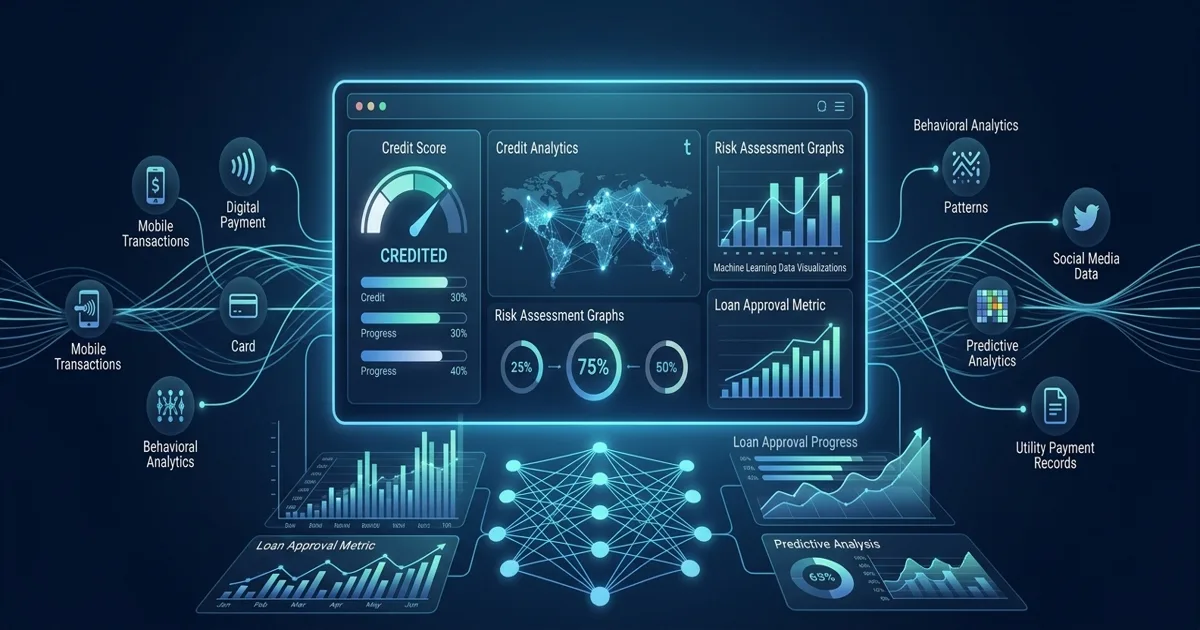
AI consulting services are redefining how financial institutions evaluate creditworthiness. Traditional credit scoring models, built on limited financial data and static risk parameters, struggle to keep pace with the demands of modern lending. As digital finance evolves, banks, NBFCs, fintech companies, and lending platforms are turning to artificial intelligence services to build smarter, faster, and more inclusive credit risk models. This blog explores how AI powered credit scoring works, why it matters, and how organizations can implement it responsibly with expert guidance.
Key Takeaways
AI consulting services help financial institutions move beyond static credit models toward dynamic, data driven risk assessment using machine learning and alternative data sources.
Successful AI adoption in lending requires strong data engineering, governance, explainability, and regulatory compliance foundations supported by expert data science consulting services.
Organizations that embrace AI powered credit scoring will improve loan approval accuracy, reduce defaults, and expand financial inclusion for underserved borrowers.
Why Traditional Credit Scoring Is No Longer Enough
Traditional credit scoring has served the financial industry for decades, but its limitations are becoming increasingly difficult to ignore in a data rich, fast moving lending environment.
Static Risk Models and Their Limitations
Conventional credit models rely heavily on bureau scores, repayment history, and income documentation. These static parameters fail to capture the full financial picture of a borrower. Thin file customers, freelancers, gig workers, and first time borrowers are often excluded or inaccurately assessed. According to the World Bank financial inclusion research, billions of adults globally remain unbanked or underserved, partly due to rigid credit evaluation frameworks that overlook non-traditional financial signals.
The Need for Real Time Credit Decisions
Modern consumers and businesses expect instant lending decisions. Static models processed through manual workflows cannot meet this expectation. Digital lending platforms, Buy Now Pay Later providers, and neobanks require credit decisions in seconds, not days. AI powered systems analyze real time data streams and deliver instant risk assessments, giving lenders a significant competitive advantage while improving customer experience.
Growing Demand for Financial Inclusion
Expanding credit access to underserved populations is both a business opportunity and a social imperative. Traditional scoring methods systematically exclude borrowers who lack formal credit histories. AI models trained on alternative data, such as utility payments, mobile usage patterns, and digital transaction behavior, can assess creditworthiness more inclusively and accurately for these segments.
What Is AI Powered Credit Scoring?
AI powered credit scoring is a modern approach to lending risk assessment that uses machine learning algorithms, predictive analytics, and multi source data to evaluate a borrower's likelihood of repayment. Unlike traditional models, AI systems continuously learn from new data, adapt to market changes, and generate more nuanced risk profiles.
How Machine Learning Improves Risk Assessment
Machine learning models can process thousands of variables simultaneously, identifying complex patterns that traditional statistical models miss. Gradient boosting, neural networks, and ensemble models are commonly used to predict default probability, segment borrowers by risk, and optimize lending portfolios. These approaches, championed by leading machine learning companies in USA and globally, consistently outperform conventional scoring in both accuracy and speed. McKinsey financial services research highlights how advanced analytics are improving underwriting outcomes across banking and lending institutions worldwide.
The Role of Alternative Data
AI credit scoring draws on structured and unstructured data from diverse sources, including banking transactions, repayment history, e commerce behavior, social signals, utility payments, and digital interactions. This broader data universe enables lenders to evaluate borrowers who would otherwise be invisible to traditional systems. Artificial intelligence services help organizations identify which alternative data sources are most predictive and how to integrate them ethically and compliantly into scoring pipelines.
How AI Consulting Is Transforming Credit Scoring
AI consulting services provide the strategic and technical foundation that financial institutions need to build, deploy, and scale intelligent credit scoring solutions. Rather than simply implementing algorithms, expert AI consultants assess data readiness, design appropriate model architectures, and align AI initiatives with business goals and regulatory requirements.
Predictive Risk Modeling
AI consultants help organizations build predictive risk models that go beyond default probability to include early warning indicators, behavioral risk signals, and macroeconomic sensitivity. These models enable lenders to proactively manage portfolio risk and adjust credit strategies before losses materialize. IBM Institute for Business Value research confirms that AI driven risk modeling is helping financial institutions improve decision quality and reduce exposure across lending portfolios.
Fraud Detection and Prevention
AI models can detect fraudulent loan applications by identifying anomalies in applicant behavior, device fingerprints, and cross referencing data inconsistencies in real time. Anomaly detection algorithms flag suspicious patterns that rule based systems would miss, reducing fraud related losses significantly. This capability is increasingly essential for digital lending platforms handling high volumes of applications.
Automated Credit Decisioning
Automated decisioning engines powered by AI can approve, decline, or escalate credit applications without human intervention for standard cases. This accelerates loan processing, reduces operational costs, and improves consistency. Lenders can configure decision rules, risk thresholds, and approval criteria that align with their portfolio strategy and regulatory obligations, with AI providing the analytical backbone.
Continuous Model Learning and Optimization
Unlike static scorecards, AI models can be retrained regularly on fresh data to capture shifting borrower behavior, economic conditions, and repayment patterns. This continuous learning capability ensures that credit scoring remains accurate and relevant over time. Data science consulting services play a critical role in designing model monitoring frameworks, retraining schedules, and performance benchmarks that keep AI systems aligned with business objectives.
Enterprise Use Cases Across Financial Services
AI powered credit scoring is delivering measurable value across a wide range of financial services verticals.
Retail Banking
Retail banks are using AI to improve personal loan approvals, credit card limit decisions, and mortgage underwriting. Machine learning models analyze customer transaction history, behavioral patterns, and external economic signals to deliver more accurate and timely credit decisions for individual borrowers.
FinTech and Digital Lending
Fintech lenders are at the forefront of AI adoption in credit scoring. Digital first platforms leverage alternative data and real time analytics to serve segments that traditional banks cannot reach efficiently. AI consultants help these organizations build scalable, cloud native scoring infrastructure that supports rapid growth and evolving product offerings.
NBFCs
Non banking financial companies serve a diverse and often underserved borrower base. AI powered scoring enables NBFCs to expand their credit portfolios responsibly by identifying creditworthy borrowers in rural, semi urban, and informal economy segments using alternative financial signals and behavioral data.
Insurance
Insurance companies use AI driven risk scoring to assess policyholder creditworthiness, predict claim probability, and optimize premium pricing. Integrating credit risk signals with insurance underwriting models enables more accurate risk segmentation and improved profitability across product lines.
Buy Now Pay Later
Buy Now Pay Later platforms operate at high velocity with thin data on new customers. AI scoring models assess real time transaction signals, device behavior, and purchase patterns to make instant credit decisions at checkout. This use case demands both speed and precision, making AI consulting essential for building robust, low latency scoring systems.
The Role of AI Consulting Services in Credit Scoring Transformation
AI consulting services are not simply about deploying models. They encompass the full journey from strategy to sustainable operation. Here is how expert AI consultants create lasting value in credit scoring transformation.
AI strategy and roadmap: Consultants assess organizational readiness, define AI objectives aligned with business goals, and develop a phased implementation roadmap that prioritizes high impact use cases in credit risk management.
Data readiness assessment: Before any model can be built, the quality, completeness, and accessibility of data must be evaluated. Data engineering capabilities are foundational to ensuring that data pipelines are reliable, consistent, and audit ready for AI model training and validation.
Model selection and validation: Selecting the right machine learning approach for a specific credit context requires deep expertise. Consultants evaluate model candidates, run backtests, and validate performance across diverse borrower segments before deployment.
Regulatory compliance and explainability: AI credit decisions must be explainable to regulators and borrowers. Consultants embed explainable AI techniques such as SHAP and LIME into scoring models to ensure transparency and meet evolving compliance standards. Deloitte financial services insights emphasize that responsible AI governance is now a regulatory expectation, not optional.
Integration with existing lending systems: AI models must integrate seamlessly with loan origination systems, core banking platforms, and CRM tools. Expert integration ensures that AI powered decisioning enhances rather than disrupts existing operational workflows.
Challenges Organizations Must Address
Implementing AI powered credit scoring is not without challenges. Organizations must address these obstacles proactively to realize the full potential of AI in lending.
Data Quality and Availability
Inconsistent, incomplete, or siloed data undermines model accuracy. Building robust data pipelines and governance frameworks is a prerequisite for any successful AI credit scoring initiative.
Model Bias and Fairness
AI models trained on historical data can perpetuate or amplify existing lending biases. Regular bias audits, diverse training datasets, and fairness metrics must be embedded into the model development lifecycle to ensure equitable credit access.
Regulatory Compliance
Credit scoring is heavily regulated. AI models must comply with data protection laws, anti discrimination regulations, and sector specific guidelines. Staying current with evolving regulatory frameworks requires dedicated compliance expertise alongside technical AI capability.
Data Privacy and Security
Handling sensitive financial and behavioral data demands robust security protocols, access controls, and data minimization practices. Organizations must ensure that AI systems meet applicable privacy standards and protect borrower data throughout the scoring process.
Model Monitoring and Governance
AI models can degrade over time as borrower behavior and economic conditions change. Continuous monitoring, drift detection, and governance frameworks are essential to maintaining model reliability and regulatory standing over the long term.
Best Practices for Implementing AI Powered Credit Scoring
Following proven implementation practices significantly improves the success rate of AI credit scoring initiatives.
Build high quality data pipelines: Invest in data engineering to ensure clean, consistent, and timely data flows from all relevant sources into the scoring system.
Prioritize explainable AI models: Choose models that can provide clear, human readable explanations for every credit decision to support regulatory compliance and borrower transparency.
Validate models continuously: Implement rigorous backtesting, champion challenger testing, and out of time validation to confirm that models perform as expected across economic cycles.
Implement responsible AI governance: Establish governance policies, bias monitoring, and ethical AI guidelines that align with organizational values and regulatory expectations.
Monitor business outcomes and model performance: Track both technical metrics such as GINI and KS statistics and business outcomes such as default rates, approval volumes, and portfolio profitability to ensure AI delivers measurable value.
The Future of Intelligent Credit Scoring
The next frontier of credit scoring combines cutting edge AI capabilities with responsible governance to create lending systems that are faster, fairer, and more adaptive than anything previously possible.
Generative AI in lending is enabling the synthesis of alternative data insights, automated report generation, and conversational credit analysis tools that help underwriters make better decisions faster. The World Economic Forum highlights how AI is fundamentally reshaping financial services through innovation in risk management and customer centric solutions.
Real time adaptive risk models will continuously update credit assessments based on live transaction data, enabling lenders to respond dynamically to changing borrower circumstances. Explainable AI will become a regulatory standard rather than a best practice, ensuring that every credit decision can be justified and audited. AI assisted underwriting will augment human judgment rather than replace it, combining machine precision with human context. Responsible AI frameworks will embed fairness, transparency, and accountability into the core of every lending system.
Organizations that invest in AI consulting and strategic advisory today will be best positioned to navigate this evolving landscape and build resilient, future ready lending operations.
Conclusion
AI consulting services are enabling financial institutions to transform credit scoring from a static, data limited process into an intelligent, adaptive, and inclusive risk assessment system. By combining machine learning, alternative data, predictive analytics, and responsible governance, organizations can make faster, fairer, and more accurate lending decisions. The key to success lies not just in the technology but in the strategic foundation of data engineering, compliance, and explainability that expert AI consultants provide. Organizations that act now will improve risk management, enhance customer experience, and build more resilient lending operations for the future.
Looking to modernize your credit scoring strategy with AI? Connect with the YlogX team to build scalable, data driven credit scoring solutions that deliver measurable business value through responsible and compliant AI adoption.
FAQs
1: What is AI powered credit scoring?
AI powered credit scoring uses machine learning algorithms and predictive analytics to evaluate borrower creditworthiness. Unlike traditional models, it analyzes structured and unstructured data from multiple sources, including transaction history, behavioral signals, and alternative financial indicators, to generate more accurate and dynamic risk assessments for lending decisions.
2: How does AI improve credit scoring accuracy?
AI improves accuracy by processing thousands of variables simultaneously and identifying complex patterns that traditional statistical models miss. Machine learning models continuously retrain on new data, reducing prediction errors and adapting to changing borrower behavior, resulting in significantly better default prediction and portfolio performance compared to conventional scoring methods.
3: What data does AI use for credit scoring?
AI credit scoring draws on banking transactions, repayment history, utility payments, e commerce behavior, digital interactions, mobile usage patterns, and social signals. This broader data universe, supported by data science and machine learning capabilities, enables lenders to assess borrowers who lack formal credit histories more accurately and inclusively.
4: Why do financial institutions need AI consulting for credit scoring?
AI consulting services provide the strategy, data readiness assessment, model selection expertise, and regulatory guidance needed to implement credit scoring AI successfully. Without expert consulting, institutions risk deploying biased models, failing compliance requirements, or building systems that do not integrate with existing lending infrastructure and operational workflows.
5: How does machine learning reduce lending risk?
Machine learning identifies subtle risk signals in borrower data that traditional models overlook, enabling more precise default prediction. By continuously learning from new repayment outcomes and market conditions, these models help lenders proactively manage portfolio risk, reduce non performing loans, and optimize credit limit decisions across diverse borrower segments.
6: Can AI improve financial inclusion in lending?
Yes. AI models trained on alternative data sources can assess creditworthiness for thin file customers, gig workers, and rural borrowers who are excluded by traditional scoring. Organizations leveraging generative AI and advanced analytics can design inclusive credit products that responsibly expand access to formal credit for underserved populations.
7: What are the main challenges of AI powered credit scoring?
Key challenges include data quality and availability, model bias and fairness, regulatory compliance, data privacy and security, and ongoing model monitoring. Organizations must invest in robust data engineering, bias auditing, explainability frameworks, and governance policies to address these challenges effectively and maintain regulatory standing over time.
8: How can organizations implement responsible AI in lending?
Responsible AI in lending requires explainable models, bias monitoring, diverse training data, and strong governance policies. Organizations should embed fairness metrics into the model development lifecycle, conduct regular audits, ensure regulatory compliance, and establish clear accountability frameworks. Expert AI consulting professionals help align technical implementation with ethical and legal standards consistently.
9: What is the role of data engineering in AI credit scoring?
Data engineering is the foundation of any AI credit scoring system. It ensures that data pipelines are reliable, clean, and audit ready for model training and validation. Without high quality data infrastructure, AI models produce unreliable predictions. Strong data engineering practices are essential for building scalable, compliant, and high performing credit scoring systems.
10: How do AI consultants help with regulatory compliance in credit scoring?
AI consultants embed explainability techniques such as SHAP and LIME into credit models, ensuring that every decision can be justified to regulators and borrowers. They also help organizations navigate data protection laws, anti discrimination regulations, and sector specific guidelines, building compliance into the AI system architecture from the beginning rather than as an afterthought.