Customer Intelligence: Generative AI for Business in Action
YlogX Team · 2026-07-14
Generative AI for business is transforming customer intelligence. Learn how enterprises can unify data, predict behavior, and personalize at scale.
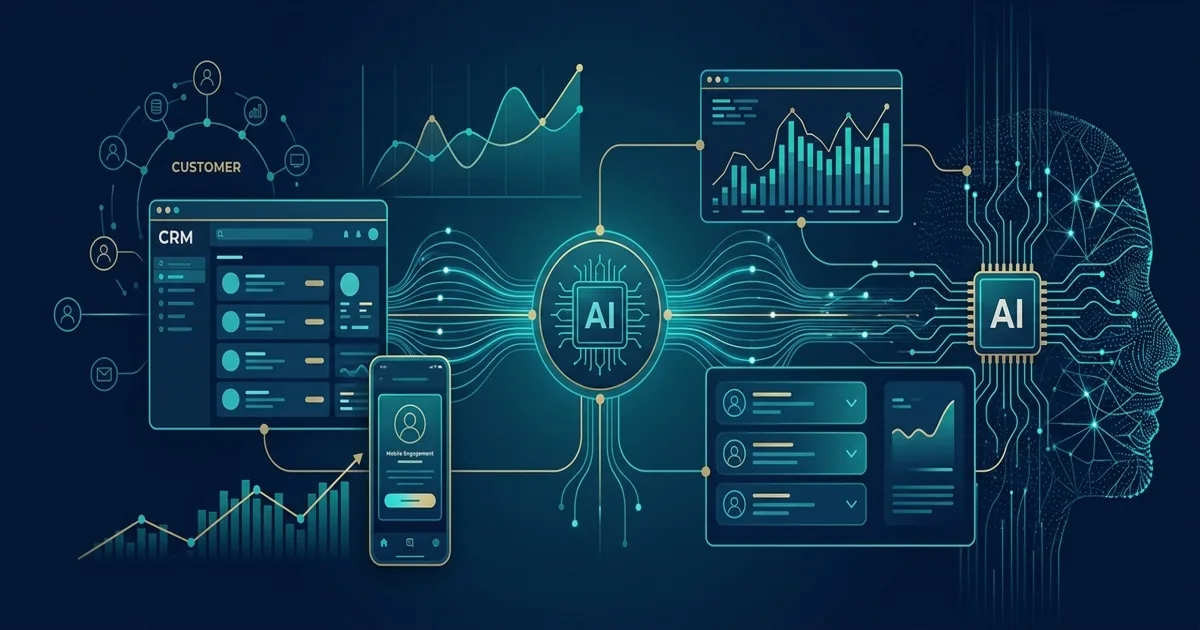
Generative AI for business is fundamentally changing how enterprises understand, engage, and retain their customers. Organizations today collect enormous volumes of customer data across CRM systems, marketing platforms, support channels, and digital touchpoints. Yet most still struggle to transform this data into actionable intelligence. Traditional analytics tools deliver historical dashboards, but they rarely answer the questions that matter most: What will this customer do next? Why are they likely to churn? What offer will convert them today?
Key Takeaways
Generative AI for business enables enterprises to move from historical reporting to real-time, predictive customer intelligence that drives measurable business outcomes including higher retention, conversion, and customer lifetime value.
Successful implementation requires strong AI consulting, data engineering, and governance aligned to business objectives, not just AI models in isolation.
Industries including retail, banking, healthcare, insurance, manufacturing, and telecommunications are already realizing competitive advantage through enterprise-grade Generative AI solutions.
Why Customer Intelligence Matters More Than Ever
Changing Customer Expectations
Customers today expect businesses to know them. According to Salesforce's State of the Connected Customer report, over 65 percent of customers expect companies to adapt to their changing needs and preferences in real time. They expect personalized recommendations, relevant communication, and seamless experiences across every channel. Organizations that fail to meet these expectations lose customers quickly in competitive markets.
The gap between customer expectations and enterprise delivery is growing. Businesses that rely solely on periodic reports and rule-based segmentation cannot respond fast enough. Generative AI for business bridges this gap by enabling continuous, intelligent, and contextual customer understanding at scale.
The Cost of Poor Customer Insights
Poor customer intelligence is expensive. Missed churn signals lead to preventable revenue loss. Irrelevant marketing campaigns reduce engagement and increase acquisition costs. Misaligned product recommendations erode trust and reduce conversion rates. When enterprises operate without real-time customer insights, every customer-facing decision is made with incomplete information.
According to Deloitte's State of Generative AI in the Enterprise, organizations investing in AI-driven customer experience initiatives report significant improvements in retention, satisfaction, and revenue performance. The business case for smarter customer intelligence has never been stronger.
From Historical Analytics to Predictive Intelligence
Traditional business intelligence platforms answer the question 'What happened?' Predictive and generative AI platforms answer 'What will happen?' and 'What should we do about it?' This shift from descriptive to prescriptive intelligence is at the heart of what Generative AI for business makes possible. Enterprises can now anticipate customer needs, automate next-best-action recommendations, and personalize experiences before the customer even expresses a preference.
What Is Generative AI for Business?
How Generative AI Differs from Traditional AI
Traditional AI models are trained to classify, predict, or detect patterns within structured datasets. Generative AI for business goes further. It can synthesize new content, generate contextual summaries, simulate scenarios, and interact conversationally with both structured and unstructured data. This makes it uniquely suited for customer intelligence, where insights often live in call transcripts, support tickets, emails, social media, and survey responses, not just CRM records.
Generative AI models can read an entire customer support history and produce a concise summary of sentiment, unresolved issues, and recommended next steps. This kind of synthesis was previously impossible at enterprise scale without significant manual effort.
Enterprise Applications of Generative AI
Enterprises are applying Generative AI for business across marketing, sales, customer service, product development, and operations. According to McKinsey's The State of AI report, organizations scaling AI across customer-facing functions report measurable improvements in productivity, decision-making speed, and customer satisfaction. Generative AI capabilities now span intelligent content generation, real-time customer segmentation, conversational analytics, and AI-assisted sales intelligence, each contributing to stronger customer relationships and better business outcomes.
How Generative AI Is Transforming Customer Intelligence
Building a Unified Customer 360 View
One of the most powerful applications of Generative AI for business is creating a unified Customer 360 view. Most enterprises store customer data across dozens of disconnected systems including CRMs, e-commerce platforms, support tools, billing systems, and marketing automation platforms. Generative AI, powered by strong data engineering foundations, enables organizations to unify this fragmented data into a single, coherent customer profile.
This unified view allows sales teams to understand purchase history, marketing teams to personalize campaigns, and support agents to resolve issues faster. When all customer-facing teams operate from the same intelligent data layer, the entire organization becomes more responsive and customer-centric.
Intelligent Customer Segmentation
Traditional segmentation groups customers by demographics or purchase history. Generative AI enables dynamic, behavioral segmentation that updates in real time based on signals across every channel. Customers can be grouped by intent, predicted lifetime value, engagement patterns, and churn risk simultaneously. This level of granularity allows marketing teams to deliver the right message to the right customer at exactly the right moment.
Enterprises using AI-driven segmentation report higher campaign engagement, improved marketing ROI, and lower customer acquisition costs. The ability to move beyond static segments into fluid, intelligent customer groupings is one of the most impactful benefits of Generative AI for business.
Predicting Customer Churn
Churn prediction is among the highest-value use cases for enterprise customer intelligence. Generative AI models can analyze hundreds of behavioral, transactional, and interaction signals to identify customers showing early signs of disengagement. Once identified, these customers can be automatically routed to retention workflows, personalized offers, or proactive support outreach before they decide to leave.
According to the Stanford AI Index Report, global enterprise AI investment continues to accelerate, with customer retention and churn reduction among the top priority areas for AI deployment. Churn prevention powered by AI delivers direct, measurable business value that enterprises across every industry are prioritizing.
Personalized Customer Engagement
Generative AI for business enables personalization at a scale that was previously impossible. AI models can generate unique, contextually relevant messages, product recommendations, and content for individual customers based on their specific behavior, preferences, and history. This moves organizations from segment-level personalization to true one-to-one customer engagement.
Enterprises leveraging AI for personalization report improvements in customer engagement, conversion rates, and brand loyalty. The ability to deliver personalized experiences at scale is a defining competitive advantage in customer-centric markets and a core reason why investment in Generative AI for business continues to grow across every major industry sector.
AI-Powered Customer Sentiment Analysis
Understanding how customers feel about your brand, products, and service is as important as knowing what they buy. Generative AI can analyze sentiment across call center recordings, support tickets, social media posts, app reviews, and survey responses at enterprise scale. This gives leadership teams a real-time pulse on customer satisfaction and emerging issues before they escalate.
Sentiment intelligence powered by AI allows businesses to respond proactively, improve service quality, and identify product improvement opportunities based on genuine customer feedback rather than lagging satisfaction metrics.
Enterprise Use Cases Across Industries
Retail
Retailers are using Generative AI for business to power personalized product recommendations, dynamic pricing, inventory-aware promotions, and real-time loyalty program management. AI-driven customer intelligence helps retail enterprises reduce cart abandonment, increase average order value, and improve customer lifetime value through continuous, behavioral personalization.
Banking and Financial Services
Banks and financial institutions are applying AI to credit risk assessment, personalized financial product recommendations, fraud detection, and AI-assisted relationship management. Generative AI consulting services help financial enterprises navigate strict regulatory requirements while extracting maximum value from customer data assets.
Insurance
Insurance companies are using AI to analyze customer behavior, predict policy renewal likelihood, identify cross-sell opportunities, and personalize claims communication. Generative AI enables insurers to shift from reactive customer management to proactive, personalized engagement throughout the entire policy lifecycle.
Healthcare
Healthcare organizations are applying AI-powered patient intelligence to improve care coordination, personalize patient communication, predict readmission risks, and optimize appointment scheduling. Generative AI product development in healthcare must carefully balance personalization with strict compliance requirements including HIPAA and data privacy standards.
Manufacturing
Manufacturers are leveraging customer and distributor intelligence to optimize supply chain responsiveness, predict demand patterns, and improve after-sales service. AI-powered customer intelligence helps manufacturing enterprises move from transaction-based relationships toward consultative, data-driven partnerships with their buyers and channel partners.
Telecommunications
Telecom companies use AI to predict network-related churn, personalize plan recommendations, optimize customer support routing, and identify upsell opportunities in real time. Artificial intelligence services tailored for telecom enterprises help reduce churn, improve service quality scores, and increase revenue per user through intelligent, data-driven engagement.
The Role of AI Consulting in Customer Intelligence Transformation
Technology alone does not deliver customer intelligence. Enterprises need a clear strategy, a strong data foundation, and experienced guidance to implement AI solutions that deliver sustainable business value. This is where AI consulting plays a critical role.
AI Strategy and Roadmap: Consultants help enterprises identify the highest-value customer intelligence use cases, define measurable success metrics, and build a phased roadmap aligned to business priorities.
Data Readiness Assessment: Before AI models can deliver insights, data must be clean, connected, and governed. AI consultants assess data quality, identify gaps, and design integration architectures that enable reliable AI outputs.
AI Implementation and Integration: Experienced teams implement AI models, connect them to enterprise systems, and ensure that insights surface in the workflows where decisions are actually made.
Governance and Responsible AI: Effective AI governance frameworks ensure that customer intelligence initiatives remain compliant, explainable, and aligned with ethical standards and regulatory requirements.
Continuous Optimization: Customer behavior changes. AI models must be monitored, retrained, and refined to maintain accuracy and business relevance over time.
A Generative AI development company with deep consulting expertise can accelerate the journey from AI strategy to measurable business outcomes, reducing risk and maximizing value at every stage of the transformation.
Challenges Organizations Must Address
Data Silos
Customer data distributed across disconnected systems prevents enterprises from building accurate, unified customer profiles. Data engineering investment is essential to connect these silos and create the reliable data foundation that AI models require.
Poor Data Quality
Inaccurate, incomplete, or outdated customer data produces unreliable AI outputs. Enterprises must invest in data quality management, standardization, and governance before deploying customer intelligence models at scale.
Privacy and Compliance
Customer intelligence initiatives involve sensitive personal data. Organizations must comply with applicable data privacy regulations and ensure that AI systems handle customer data securely, transparently, and in accordance with established consent frameworks.
AI Governance
AI models can produce biased or unexpected outputs if not properly monitored and governed. Enterprises need explainability frameworks, bias detection processes, and clear accountability structures to ensure responsible AI deployment across customer-facing applications.
Change Management
Even the most sophisticated AI system will fail to deliver value if business teams do not adopt and trust it. Successful Generative AI for business initiatives requires stakeholder alignment, training, and a culture that embraces data-driven decision-making at every level of the organization.
Best Practices for Implementing Generative AI for Business
Build a Strong Data Foundation: Invest in data engineering, integration, and quality management before deploying AI models to ensure reliable and trustworthy outputs.
Prioritize High-Impact Use Cases: Start with customer intelligence use cases that deliver clear, measurable business value such as churn prediction, personalized engagement, or sentiment analysis.
Establish Responsible AI Governance: Define governance policies, explainability standards, and compliance frameworks from the outset rather than treating them as afterthoughts.
Measure Business Outcomes: Track AI performance against business metrics including customer retention rates, conversion improvements, campaign ROI, and customer satisfaction scores rather than technical accuracy alone.
Continuously Optimize AI Models: Monitor model performance regularly, retrain on new data, and refine use cases as customer behavior and business priorities evolve over time.
The Future of Customer Intelligence
The next generation of customer intelligence will be defined by AI agents that engage customers autonomously, hyper-personalization delivered at individual scale, and real-time decision intelligence embedded directly into every customer touchpoint. Enterprises that build their AI and data capabilities today will be best positioned to lead in this environment.
Responsible AI governance will also become a defining differentiator. Customers and regulators alike are demanding greater transparency, fairness, and accountability from AI systems that influence purchasing decisions, credit outcomes, and service access. Enterprises that invest in both AI capability and responsible governance frameworks will earn greater customer trust and long-term loyalty.
Enterprise investment in AI-driven customer experience and decision intelligence is among the fastest-growing technology priorities heading into 2025 and beyond, and the organizations building these capabilities now are creating structural competitive advantages that will be difficult to replicate.
Conclusion
Generative AI for business is transforming customer intelligence from static, historical reporting into a dynamic, predictive, and personalized capability that drives real competitive advantage. Organizations that combine strong data engineering, responsible AI governance, and experienced AI consulting will be better equipped to understand their customers deeply, act on insights quickly, and build lasting relationships that drive sustainable revenue growth. The window to build this advantage is now. Enterprises that invest in enterprise-grade Generative AI for business solutions today will be significantly better positioned to lead in the data-driven markets of tomorrow.
Ready to transform customer intelligence with Generative AI? Connect with the YlogX team to explore how our Generative AI consulting services and data engineering expertise can help your enterprise build a secure, scalable, and ROI-driven customer intelligence strategy.
FAQ
1: What is Generative AI for business?
Generative AI for business refers to AI systems that analyze data, generate contextual insights, create content, and support enterprise decision-making. Unlike traditional AI, it processes both structured and unstructured data to deliver predictive intelligence, personalized recommendations, and automated decision support across customer-facing business functions.
2: How does Generative AI improve customer intelligence?
Generative AI improves customer intelligence by unifying data from multiple sources, identifying behavioral patterns, predicting future actions, and generating real-time insights. It enables enterprises to move beyond historical dashboards toward dynamic, predictive intelligence that supports faster and more accurate customer-facing decisions at scale.
3: What are the benefits of Generative AI for customer experience?
Key benefits include personalized customer engagement, proactive churn prevention, real-time sentiment monitoring, and AI-generated product recommendations. Enterprises using Generative AI capabilities for customer experience report measurable improvements in retention, satisfaction scores, conversion rates, and overall customer lifetime value.
4: How does Generative AI personalize customer interactions?
Generative AI analyzes individual customer behavior, purchase history, sentiment, and engagement patterns to generate unique, contextually relevant messages and recommendations. This enables true one-to-one personalization at enterprise scale, moving organizations beyond broad segment-level targeting toward individualized, data-driven customer engagement strategies.
5: Why do businesses need AI consulting for customer intelligence?
AI consulting ensures that customer intelligence initiatives are grounded in a clear strategy, strong data foundations, and responsible governance. Consultants help enterprises identify high-value use cases, assess data readiness, integrate AI with existing systems, and measure outcomes against real business objectives rather than technical metrics alone.
6: What industries benefit most from Generative AI for customer intelligence?
Retail, banking, insurance, healthcare, manufacturing, and telecommunications all benefit significantly. Each industry uses Generative AI for business to solve specific challenges such as churn prevention, personalized recommendations, fraud detection, patient engagement, and demand forecasting, all of which contribute to stronger customer relationships and revenue growth.
7: How does Generative AI improve customer retention?
Generative AI identifies early churn signals by analyzing behavioral, transactional, and interaction data. It then triggers automated retention workflows, personalized offers, or proactive support outreach. Enterprises applying data science and machine learning to churn prediction consistently reduce preventable customer loss and protect long-term revenue.
8: What challenges should businesses address before implementing Generative AI?
Organizations must address data silos, poor data quality, privacy compliance, AI governance, and change management before deploying Generative AI at scale. Without a strong data foundation and clear governance framework, AI models produce unreliable outputs that fail to deliver the business value that enterprise leaders expect from customer intelligence initiatives.
9: What is a Customer 360 view and why does it matter for AI?
A Customer 360 view is a unified, single profile that consolidates data from all touchpoints including CRM, marketing, support, and billing systems. It provides the complete, reliable data foundation that Generative AI for business models need to generate accurate predictions, relevant recommendations, and actionable intelligence across every customer interaction.
10: How can enterprises measure the ROI of Generative AI in customer intelligence?
Enterprises should track business metrics including customer retention rates, marketing campaign ROI, conversion rate improvements, customer satisfaction scores, and reductions in churn. Aligning AI performance measurement to these outcomes ensures that AI solution accelerators deliver genuine, demonstrable business value across customer intelligence programs.